How Artificial Intelligence Will Transform 100 Occupations: Three Stages of the Future of Work
An evidence-based look at how cognitive AI, autonomous computer agents, and physical robots could change what people do, and how productive they can be.
· 19 min read
Introduction: The Wrong Question About AI and Work
Most talk about artificial intelligence and work comes down to one question: Which jobs will AI replace?
But there might be a more helpful question to ask about the future:
How will artificial intelligence change the work that people actually do in different occupations?
Let's take an accountant, a nurse, a farmer, and an electrician.
Today, these people work in very different places and do very different tasks.
But all four could benefit from artificial intelligence.
Just not necessarily in the same ways.
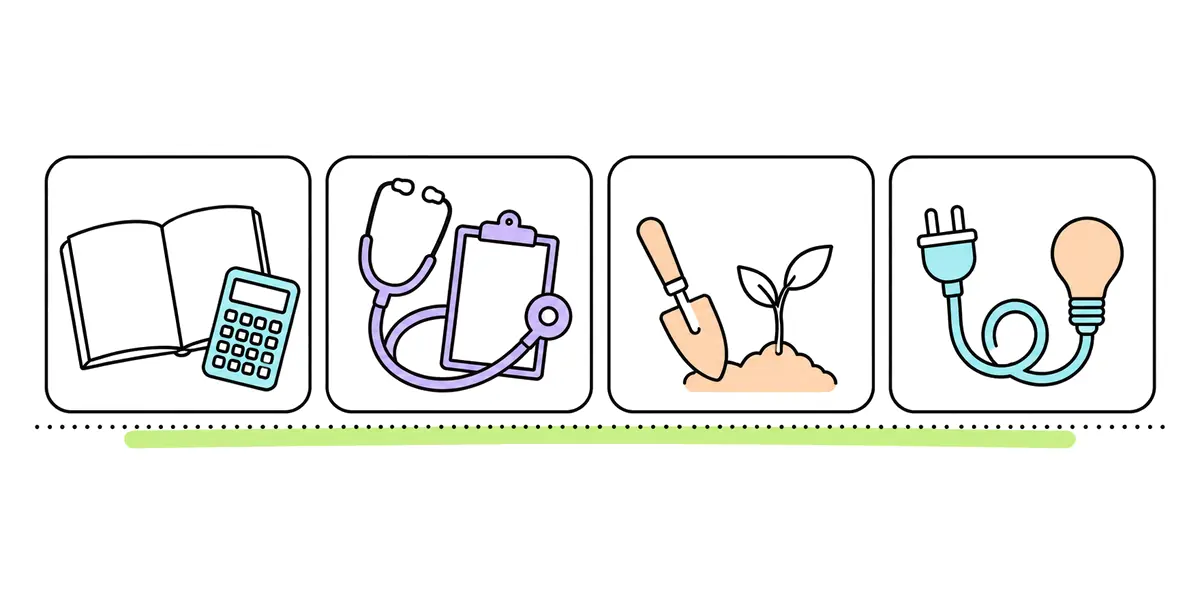
The accountant might benefit a lot from an AI that can run accounting software on its own.
The nurse might benefit from automated documentation and patient monitoring.
The farmer might benefit from robots that can recognize and harvest individual crops.
The electrician might benefit from an AI assistant that understands electrical diagrams, looks at installations through cameras, and later even does some of the physical work.
These changes won't necessarily happen at the same time.
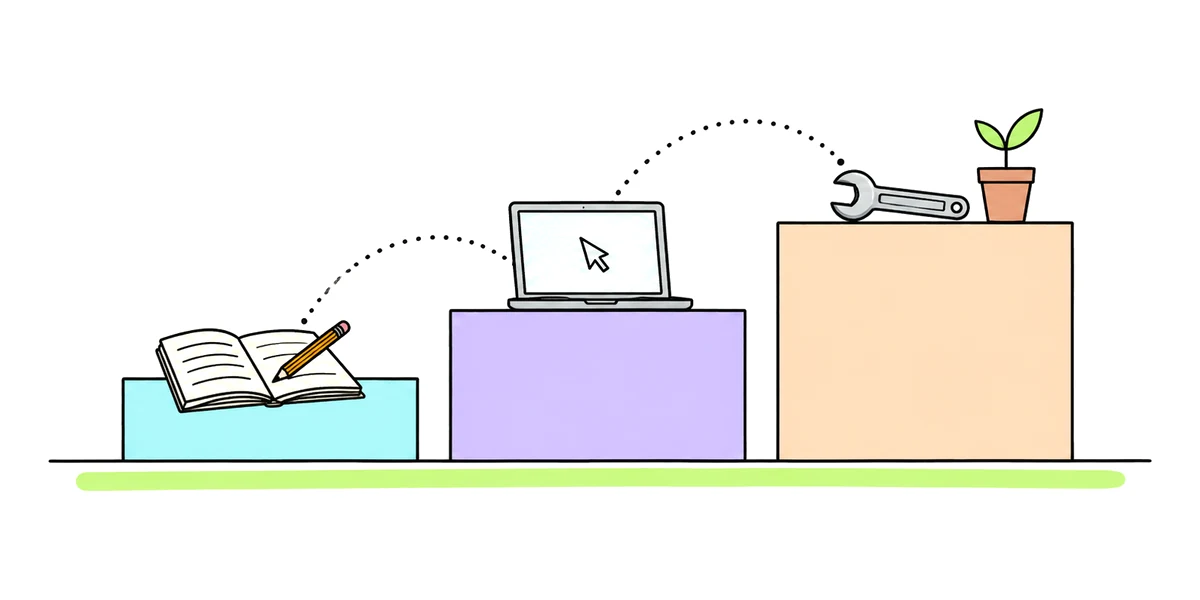
AI is moving from understanding information, to acting in digital spaces, and then to more and more general physical abilities.
In this article, we'll talk about three stages of capability:
- Cognitive intelligence: AI's ability to understand, analyze, and create information.
- Digital agency: AI's ability to run software on its own and carry out complex digital workflows.
- Physical agency: AI's ability to act in the physical world with more and more human-like speed, dexterity, and adaptability.
The aim here is not to predict unemployment, to argue whether humans will still be needed, or to guess exactly when each stage will arrive.
Instead, we're going to look at how work itself might change, and where productivity gains might come from.
To do this, we'll look at 100 occupational groups.
They cover agriculture, healthcare, education, business, manufacturing, transportation, construction, services, and other major areas of economic activity.
1. The Global Workforce: What the Data Actually Tells Us
Before we talk about the impact of AI, we need a clear picture of the world's occupations.
A good international starting point is the International Labour Organization's International Standard Classification of Occupations, also called ISCO-08.
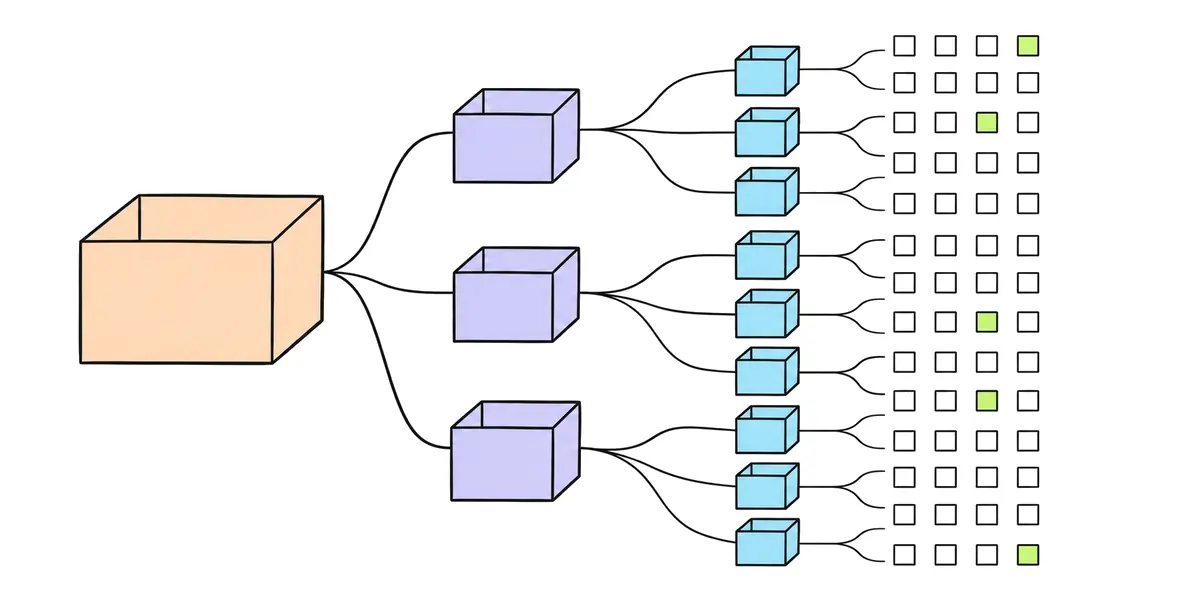
ISCO-08 groups the world's occupations into:
| Classification level | Number of groups |
|---|---|
| Major occupational groups | 10 |
| Sub-major groups | 43 |
| Minor occupational groups | 130 |
| Detailed unit groups | 436 |
Source: International Labour Organization, ISCO-08.
The big advantage of this classification is that it's built for comparing countries.
Not for describing employment in just one country.
There is one statistical problem, though.
There's no easy-to-find, complete, globally standardized public list of the 100 biggest individual occupations by employment.
The ILO publishes estimates of global employment and how it splits across occupations.
But the global numbers are usually more aggregated than the specific occupations we'd need for an accurate top-100 list.
Detailed national employment surveys exist.
But combining them properly takes careful adjustments for country coverage, classification differences, missing data, informal work, and survey years.
So this article doesn't pretend that its 100 occupations are exactly the world's 100 biggest by headcount.
Instead, it picks 100 well-established ISCO-08 minor occupational groups.
The choice favors work that many people do, and covers the whole global economy.
The numbers only identify the entries in this analysis.
They're not a worldwide ranking by employment.
The 100 minor groups of this post
This matters.
Calling a speculative list an official statistic would undermine the whole point of a data-driven analysis.
A global perspective changes the picture
Most of the world's workers are not office workers.
World Bank data, based on ILO estimates, shows that around 25.8% of global employment was in agriculture in 2025.
The ILO also estimated that 57.9% of global employment was informal in 2025.
Sources: World Bank — Employment by sector and ILO — The World of Work and the 2030 Agenda.
In agriculture: 25.8%
Informal: 57.9%
These numbers matter a lot for AI.
An AI software agent that can work with spreadsheets might change a company's finance department completely.
But it might do very little for a subsistence farmer who has no reliable electricity, internet, or affordable machinery.
Even within the same occupation, the impact of technology can vary a lot between countries.
A commercial farmer using GPS-equipped machinery starts from a very different place than someone farming a small plot by hand.
So if we only look at AI from a digital point of view, we miss a large part of the work humanity does.
2. Three Stages of Artificial Intelligence
The three stages in this analysis are based on capabilities.
Not dates.
They're cumulative.
The second stage builds on the first.
The third builds on the capabilities of both the first and the second.
Added by Stage 1Added by Stage 2Added by Stage 3
And they're not strictly separate.
Computer-using AI agents and specialized autonomous robots already exist in 2026.
What changes between stages is how reliable, adaptable, autonomous, and useful in practice they are.
Stage 1: Cognitive Intelligence

From information processing to intelligent assistance.
In the first stage, we're looking at systems that can understand and create text, images, speech, code, and other information.
These systems can:
- Summarize documents and conversations.
- Analyze data sets and spot patterns.
- Understand photographs and diagrams.
- Create reports, software, and teaching material.
- Help with research, planning, and decision-making.
The main interaction is still a conversation or a document.
A person usually provides information, gets a result back, and then decides what to do next.
Example: An accountant
The accountant uploads financial records and asks the AI to find discrepancies.
The AI goes through the information.
Then it recommends how to fix them.
The accountant is still switching between apps, looking for missing documents, entering data, and carrying out the workflow.
The big productivity gain is in cutting the effort needed to process and understand information.
Stage 2: Digital Agency
From answering questions to doing work.
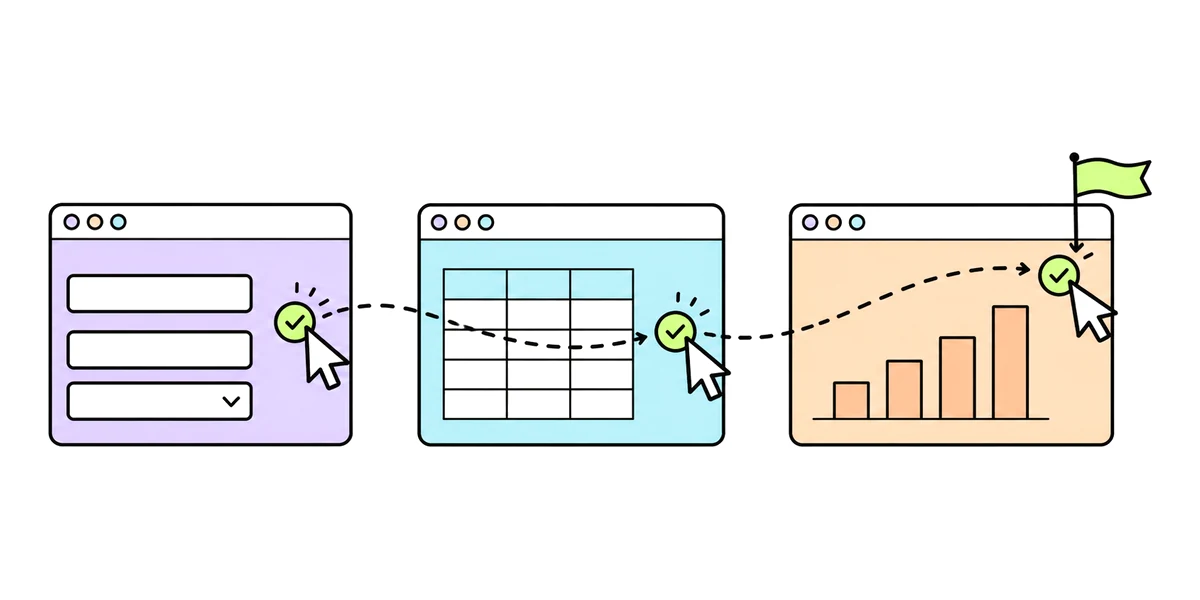
The second stage starts when AI can reliably work in digital spaces.
So AI doesn't just tell a professional what to do.
It takes a series of actions across applications.
These systems would be able to:
- Work across websites and desktop applications.
- Read, edit, and reconcile records.
- Communicate across authorized business systems.
- Manage multi-step processes.
- Watch for events and respond when things change.
- Check results and pass exceptions up to a person.
This is a big shift.
A traditional AI assistant helps someone use software.
An autonomous digital agent uses the software itself.
Example: The same accountant
The accountant gives the agent the task of preparing the monthly financial close.
The agent fetches transactions, matches invoices, updates the accounting records, looks into discrepancies, prepares reports, and brings the unresolved exceptions to the accountant for review.
The accountant's main role is setting goals, handling unusual cases, and approving the final results.
So the productivity gain comes from cutting manual coordination and work inside apps.
Not just from writing text faster.
In 2026, these capabilities are already advancing quickly.
But it's still hard to get them to complete long, complex workflows reliably.
Stanford's 2026 AI Index reported that leading agents reached about 66% success on the original OSWorld computer-use benchmark.
The newer OSWorld 2.0 benchmark shows that long-horizon workflows are much harder.
Stage 3: Physical Agency
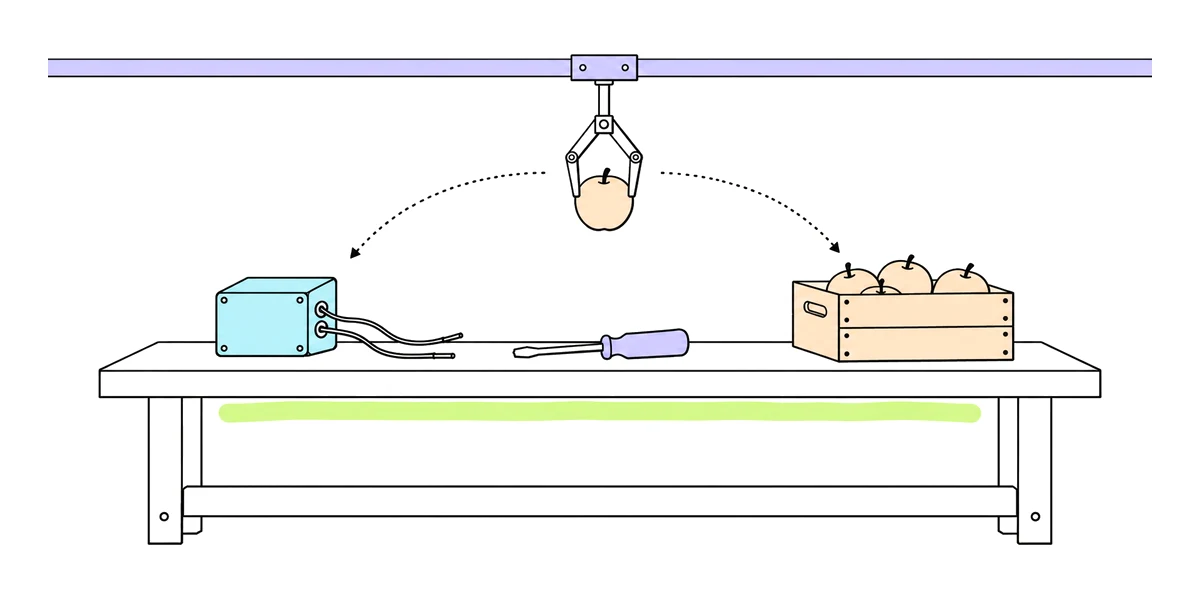
From running software to working in the physical world.
The third stage is about AI systems that can take physical action, with advanced perception, motor control, and the ability to adapt in real time.
This could show up in humanoid robots, specialized industrial machines, autonomous vehicles, agricultural robots, medical devices, and other physical systems.
And physical agency doesn't have to mean humanoid robots.
On a farm, a specialized harvesting machine might be more useful than a humanoid robot.
Stage 3 is about the ability to:
- Handle many different objects.
- Move through changing environments.
- Coordinate perception and movement in real time.
- Recover from unexpected physical situations.
- Work safely around people.
- Go beyond narrowly scripted actions.
Example: The accountant
Once Stage 2 has automated most digital workflows, physical agency might add fairly little to accounting.
A robot could handle paper documents, archive material, or help with physical inventory audits.
But the main information-processing bottlenecks of the job may already be gone.
For an electrician, though, Stage 3 could make a big difference.
An AI-powered robot might inspect wiring, handle tools, help with installations, and test equipment, all under proper safety controls.
So the effect depends on the physical side of each occupation.
Industrial robotics already matters a lot economically.
The International Federation of Robotics reported about 603,000 industrial robot installations worldwide in 2025, which brought the number of robots in operation above five million.
But general-purpose robots are still far from reliably matching human adaptability in unstructured environments.
It's not just about an AI model that understands which physical task to do.
It also has to do that task reliably, affordably, and safely.
Sources: Stanford AI Index 2026, OSWorld 2.0, and International Federation of Robotics.
3. What Does an Increase in Productivity Actually Mean?
People often talk about AI productivity as if it were one single percentage.
But different occupations produce very different things.
A customer support representative solves customer problems. A nurse provides care. A truck driver moves goods. A farmer grows crops. A construction worker finishes physical installations.
To measure productivity, we need to know which output matters.
For this analysis, productivity has four parts.

1. Task efficiency
How much less time does a worker need for a specific task?
2. Output capacity
How much more work can be done in a given time without losing quality?
3. Output quality
Can the worker cut errors, be more precise, or get better results with the same resources?
4. Expanded capabilities
Can the worker now do things that used to be too difficult, too costly, or too time-consuming?
These parts are connected, but not interchangeable.
Let's say an occupation involves 8 hours of work each day:
- 2 hours of documentation.
- 2 hours of gathering information.
- 3 hours of physical work.
- 1 hour of communication and coordination.
Now let's say Stage 1 AI cuts the time spent on documentation and research in half.
The worker saves 2 hours.
That's 25% of the original work day.
But that doesn't automatically mean 25% more output.
The remaining physical work, customer demand, equipment, and coordination may still limit production.
If the worker can put the saved time into productive work without creating a new bottleneck, the same 8 hours could produce more.
In the ideal case, cutting an 8-hour workload to 6 hours would allow about 33% more equivalent tasks per hour.
DocumentationGathering informationPhysical workCommunication and coordination
But real conditions rarely meet every assumption that conversion needs.
What has actually been measured?
There's already good evidence that AI affects productivity.
But the effect varies with the task and the context.
| Study | Measured finding |
|---|---|
| Customer support, published 2025 | AI assistance raised issues resolved per hour by about 15% on average, across more than 5,000 agents. |
| Experienced open-source developers, 2025 | In one randomized study, developers using AI tools took about 19% longer to finish selected real software tasks. |
| Physicians, 2026 | A multi-site observational study linked the use of AI scribes to about 16 fewer documentation minutes per 8 scheduled patient hours, and a small increase in weekly patient visits. |
| University physics education, 2025 | A randomized experiment found that students using a custom-built AI tutor learned more in less time than students in the comparison active-learning class. |
Sources: Brynjolfsson, Li and Raymond, Generative AI at Work, METR Developer Productivity Study, JAMA AI-Scribe Study, and AI Tutoring Randomized Trial.
These studies show why broad claims about AI productivity are hard to defend.
A technology that speeds up one thing can add review, correction, or integration work somewhere else.
So for the 100 occupations below, this article looks at the ways productivity could improve.
It doesn't make unsupported numerical growth forecasts.
These are reasoned capability scenarios.
They're based on the tasks of each occupation.
Not on 100 controlled experiments.
4. One Hundred Occupations Across the Three Stages
I went through 100 occupational groups, from managers and doctors to cooks, farmers and refuse workers, and asked the same questions of each: what the work is today, and what each of the three stages adds.
Work done mostly with information and software gains the most from Stages 1 and 2. Work done mostly with the hands gains little until Stage 3. Section 5 draws out the patterns.
The full list is long, so it sits in the appendix at the end, as one table you can search, sort and open row by row.
5. What the 100 Occupations Reveal
Looking at all these occupations together, a few patterns keep coming back.
The most important one: how useful AI is economically depends on how intelligence connects to the actions needed to produce something valuable.
Each occupation has different bottlenecks.
For some, the bottleneck is understanding information.
For others, it's working through software.
For others, it's handling physical objects.
And for many, it's a mix of all three.
Pattern 1: Some Occupations Benefit Disproportionately From Digital Agency
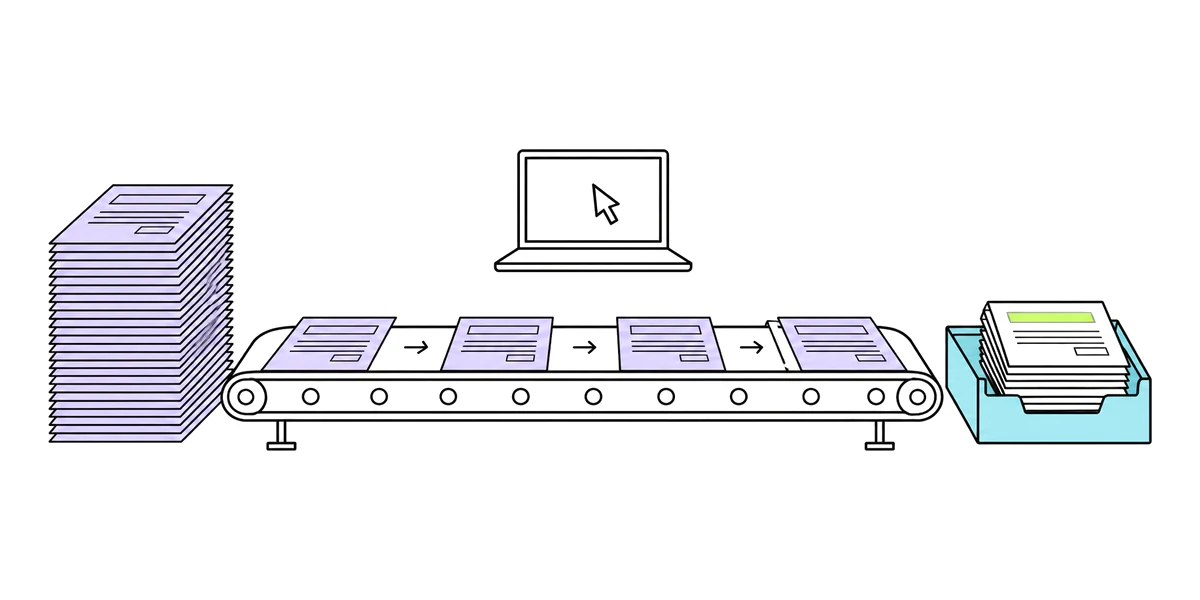
Take accountants, clerks, administrative specialists, IT support technicians, and many finance professionals.
These occupations rely heavily on digital systems.
Stage 1 can speed up reasoning, documentation, and preparing information.
But Stage 2 changes something deeper: the AI can carry out the workflows that people used to do by hand.
That's a big difference.
An AI that explains how to reconcile two accounting data sets is useful.
An AI that fetches both data sets, compares them, looks into the discrepancies, updates the accounting system, and writes an exception report is useful on a whole other level.
For these occupations, going from assistance to reliable agents may change workflows more than better language generation alone.
Stage 3 may add fairly little.
That doesn't mean every digital workflow can run on its own. Data quality, access permissions, handling of exceptions, and institutional accountability still decide what can be handed over.
Pattern 2: Physical Occupations Have a Different Bottleneck

Take farm laborers, construction workers, cleaners, assemblers, and warehouse workers.
Stage 1 can give better instructions, scheduling, and information.
Stage 2 can improve coordination.
But neither one necessarily does the main physical work.
A cleaner with access to a great language model still has to clean the room.
A farm worker with a smart digital assistant may still have to harvest the crops.
Stage 3 changes this, because now AI can do suitable physical tasks.
But the cost of the robot, its maintenance, safety, and adaptability may matter more than how intelligent it is.
A robot that can do a task but costs more than the value it produces doesn't raise productivity.
This matters most in countries where labor is cheap and capital is scarce.
Pattern 3: Certain Occupations Have Multiple Productivity Frontiers
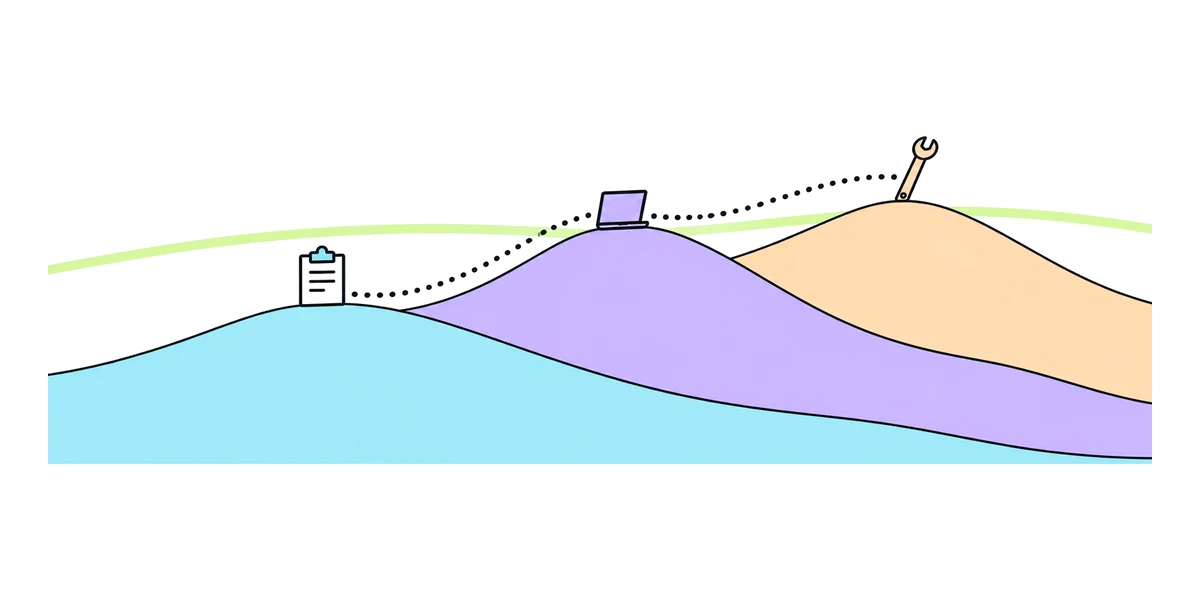
Healthcare is a good example.
A doctor's work mixes information processing, digital coordination, physical examination, and dealing with people.
Stage 1 can cut some of the documentation and information lookup.
Stage 2 can cut administrative friction between hospitals, labs, and health records.
Stage 3 can help with physical procedures and clinical logistics.
Each stage helps a different part of the job.
So the gains from later stages may add to the earlier ones, rather than replace them.
The same goes for engineering, industrial maintenance, agriculture, and some service occupations.
Pattern 4: Access to AI May Matter as Much as AI Capability
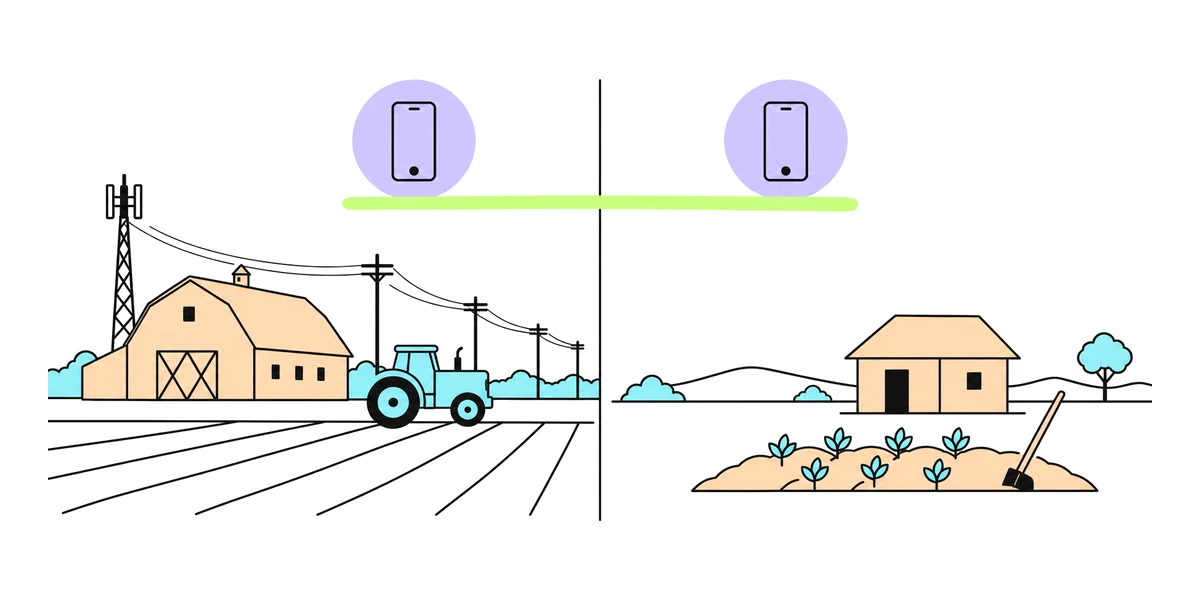
Access to digital infrastructure is very unequal across the world's workforce.
A wealthy hospital may run AI systems connected to electronic health records.
A rural healthcare provider may work without reliable internet or digital records.
A large farm may connect AI to industrial farm machinery.
A small farmer may only have a smartphone.
The AI model could be exactly the same, but the economic results could be completely different.
The ILO's 2026 Employment and Social Trends report points to lasting differences between countries in productivity, infrastructure, informality, and economic opportunity.
So what is technically possible and what people actually adopt should not be treated as the same thing.
Pattern 5: More Productive Does Not Always Mean Faster
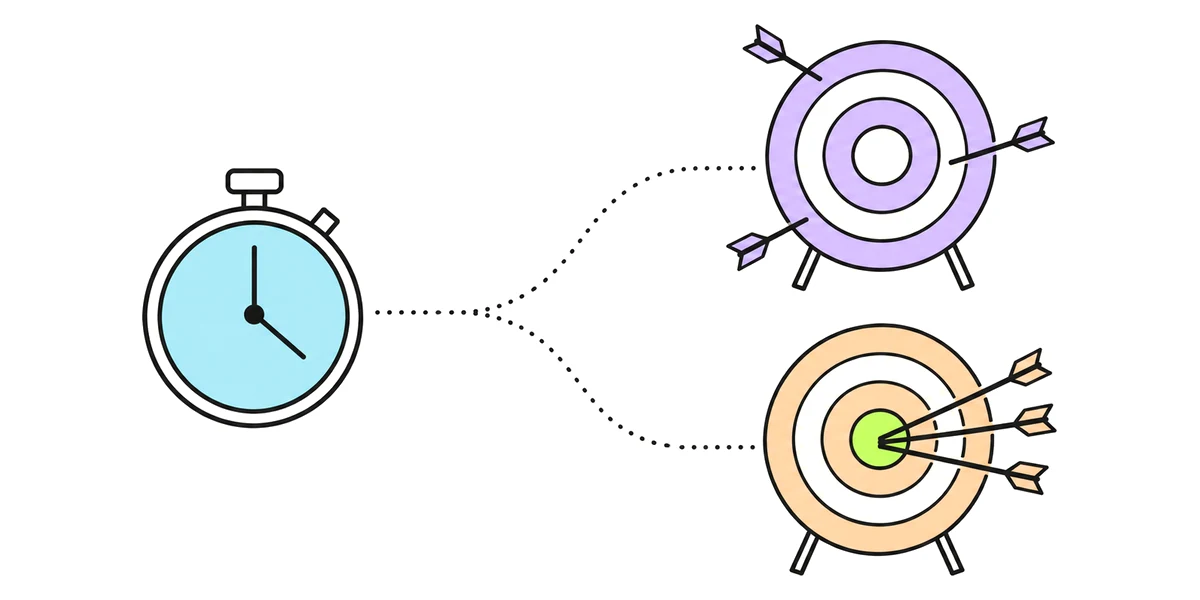
Sometimes AI improves the quality of work instead of the quantity.
An engineer might run more simulations before approving a design.
A doctor might look at more relevant clinical evidence.
A teacher might give more personal feedback.
A farmer might spot a crop problem earlier.
In each case, the professional may work about the same amount of time, but get a better result.
On the other hand, an AI can seem helpful while it actually slows work down, with needless suggestions, mistakes, or extra reviews.
So the productivity measure has to match the real goal of the occupation.
6. The Role of Time: Why These Are Capability Scenarios, Not Dates
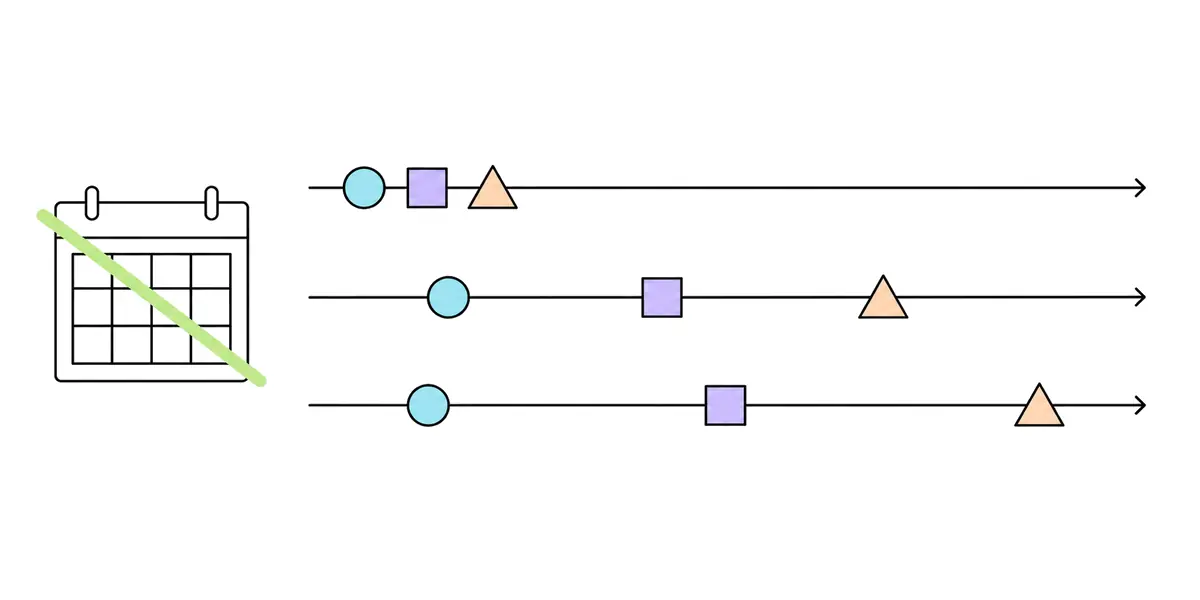
It's tempting to give each of the three stages a specific year.
For example, you might think cognitive AI is the present, digital agency comes a few years later, and physical agency comes after that.
But technology rarely moves in such clean steps.
Some narrow digital agents already do useful work.
Some factories have used industrial robots for decades.
Autonomous vehicles already carry passengers in some places.
At the same time, AI still struggles with some computer tasks that look simple, and general-purpose robots still do badly at many tasks in homes they don't know.
The Stanford 2026 AI Index reported only about 12% success on a benchmark of real-world household robot tasks, even though robots do much better on some controlled manipulation benchmarks.
So it makes sense to read the stages as thresholds of practical capability.
Stage 1 is mature enough to give useful cognitive help in many areas.
Stage 2 already exists in part, but reliable long-horizon agents that work across any professional software are still an engineering challenge.
Stage 3 already exists in specialized settings, but flexible physical agency that can compete on cost is still much more limited.
Progress could be uneven. One industry might get very capable physical automation before another one has reliable digital agents.
So this analysis is about what becomes possible when each capability is available. It doesn't claim that every industry will move on the same schedule.
7. A Better Way to Quantify AI Productivity
The 100 occupational scenarios help us see what could change.
But real quantitative forecasts would need one more layer of research.
For each occupation, we would need to estimate:
- The share of working time spent on each task.
- The part of that task that AI can do or speed up.
- How much human review and correction is needed.
- What it costs to deploy the technology.
- The effect on the final output and its quality.
- Whether the saved time can go into more productive work.
A simple starting point would be:
Net time saved = baseline task time − AI-assisted task time − extra review and coordination time.
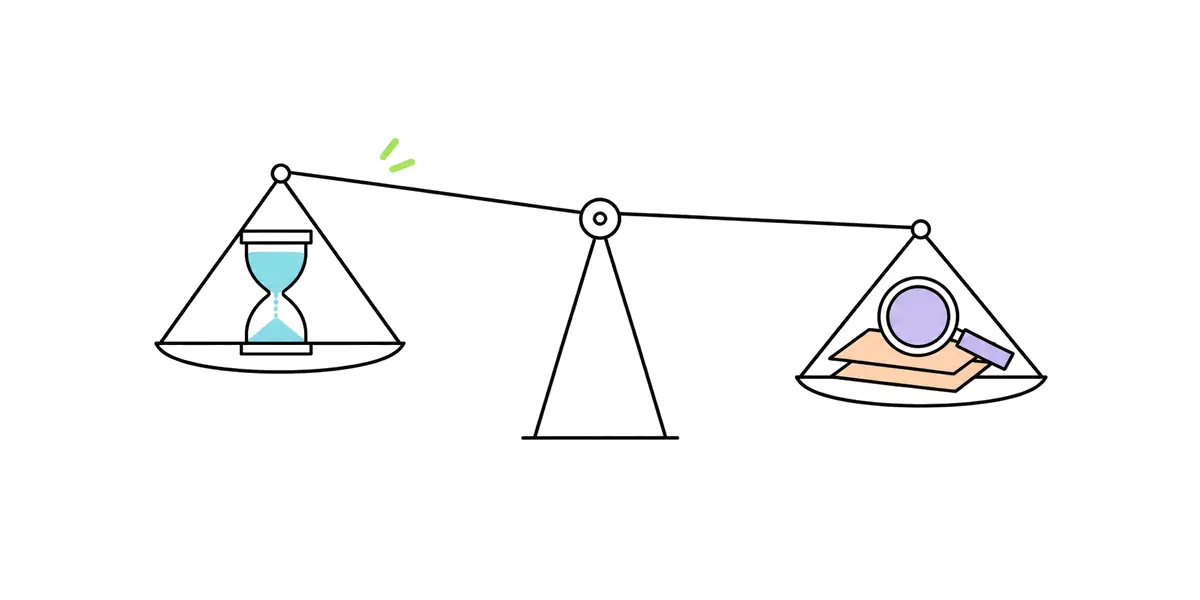
For an occupation with several tasks, we could add up the time saved on each of them.
But this would still measure time saved, not automatically total productivity.
To estimate gains in output, the model would also need to include physical limits, demand, quality requirements, and new bottlenecks.
A farmer who saves 2 hours of planning may not be able to grow more crops if land or water is the main limit.
A doctor who saves 2 hours of documentation may not be able to see more patients if exam rooms or open appointment slots are the bottleneck.
An office worker might win back several hours of administrative time, but have no more meaningful work left to do.
That's why this article doesn't give each occupation a precise-looking productivity multiplier, like 1.6× in Stage 1 or 4.2× in Stage 3. That would suggest evidence that doesn't exist yet.
A more rigorous quantitative follow-up would use real data on how each occupation's time splits across tasks, controlled studies, conditions in each country, and explicit uncertainty ranges.
The ILO's 2025 research is already a useful starting point.
Its refined global index of generative AI exposure combined task-level evidence, expert assessments, and model predictions to estimate exposure across occupations.
It concluded that about one in four workers worldwide were in occupations with some exposure to generative AI, while only 3.3% of global employment fell into its highest exposure category.
Some exposure to generative AI: 25%Highest exposure category: 3.3%
These numbers measure how exposed occupations are to generative AI, not productivity gains anyone has observed. And they don't estimate the effects of mature computer agents or general-purpose physical robots.
That difference really matters.
8. The Most Important Implication: Intelligence Is Only Part of Productivity
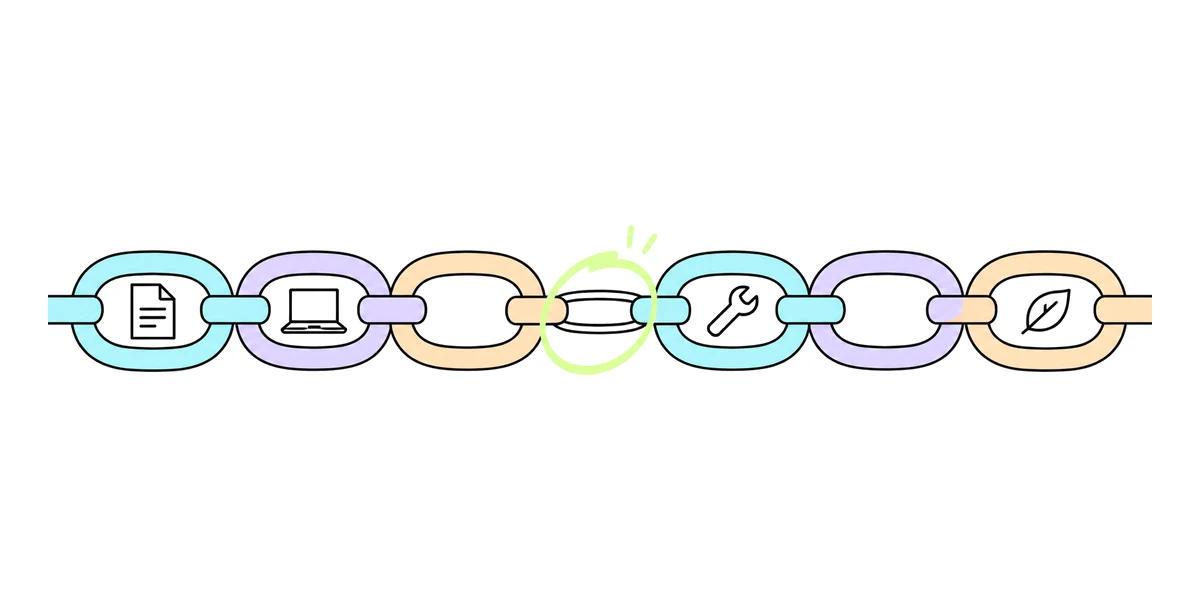
Going from Stage 1 to Stage 3 shows something interesting.
Human work isn't valuable just because people can think.
Work creates value by transforming information, coordinating activities, changing the physical world, serving people, and producing useful results.
Intelligence plays a part in almost all of these, but it's not the only limit.
For an accountant, the biggest opportunities may be information processing and software workflows.
For a truck driver, driving the vehicle may be most of the job.
For a farmer, physical work and biological conditions matter.
For a teacher, better information processing may help, but the real goal is still learning and the students' development.
For an electrician, knowing how to repair a circuit and physically repairing it are two different abilities.
So there's no single AI productivity curve that fits everyone.
Instead, each occupation has its own chain of limits.
Some may see the biggest change to their workflow in Stage 1.
Others may benefit most once AI can run software.
Others may see fairly small changes until physical systems get much more capable.
And some may benefit from all three stages in different ways.
So the core question for any profession is:
What is stopping this worker from producing more valuable output right now, and which AI capability actually removes that limit?
That's a much more precise question than asking how smart a model has become.
Conclusion: The Future of Work Is a Progression of Capabilities
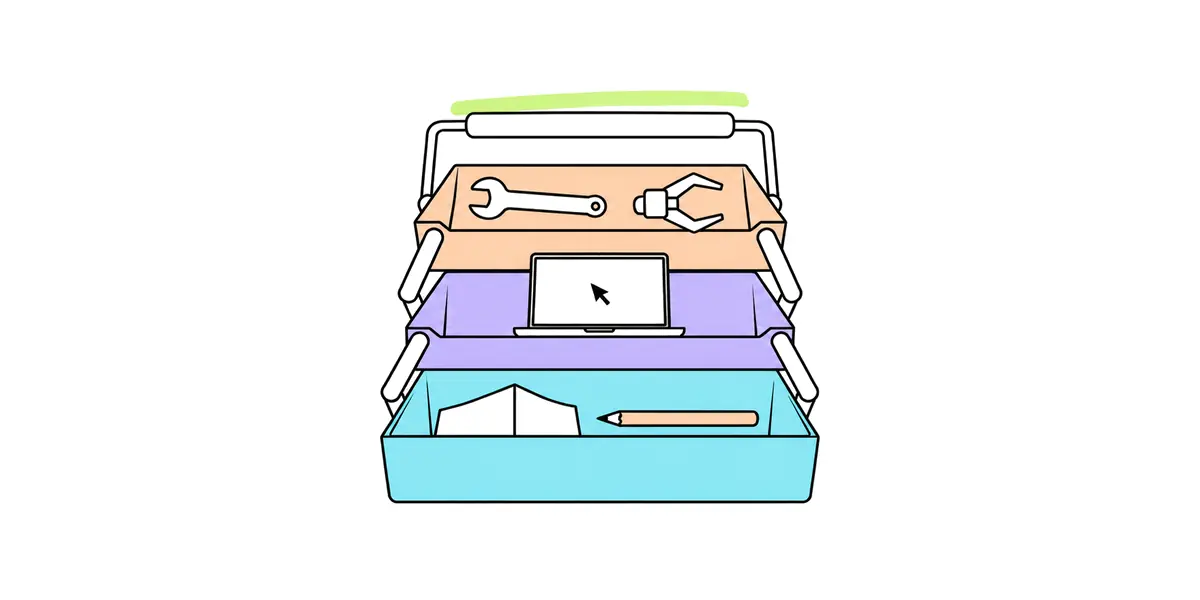
People often describe AI as a race toward more and more powerful models.
But intelligence alone doesn't tell us how work will change.
What happens in practice depends on what those models can do with their capabilities.
The first big change is the ability to understand and produce information.
The second is the ability to act on its own across digital systems.
The third is the ability to work reliably and flexibly in the physical world.
Each stage adds to the tasks that AI can help with.
But the effect differs a lot from one occupation to another.
For some professions, the most important change may be cognitive assistance.
For others, digital agency.
For others, physical robots.
And for many, all three working together.
So the result won't necessarily be the same rise in productivity across the whole economy.
Different occupations will meet different technological opportunities, adoption limits, and production bottlenecks.
The most useful way to understand AI's effect on work is not to ask whether an occupation can be automated. It's to look at the tasks that make up the occupation, the capabilities those tasks need, and the limits that decide how much doing them is worth.
Seen this way, AI stops being an abstract technological force and becomes something much more concrete: a changing set of capabilities that can change how people actually do their work.
Research Sources and Methodological References
Occupational classifications and global employment
- International Labour Organization — ISCO-08. The official worldwide classification of occupations, with group definitions and task descriptions.
- International Labour Organization — ILOSTAT. International employment statistics and occupational data.
- International Labour Organization — Employment and Social Trends 2026. Global employment, productivity, and labor market conditions.
- World Bank — Employment by Sector. Global employment split across agriculture, industry, and services.
- O*NET Database. Detailed occupational activities, tasks, and work characteristics. It mostly reflects the United States, so it's used here only as an extra task reference, not as a source of worldwide employment rankings.
AI and occupations
- ILO — Generative AI and Jobs: A Refined Global Index of Occupational Exposure (2025). A detailed assessment of AI exposure across occupational tasks.
- ILO — Generative AI and Jobs: A Global Analysis of Potential Effects (2023). Earlier research on occupational exposure and on AI that adds to tasks rather than taking them over.
Observed productivity effects
- Brynjolfsson, Li, and Raymond — Generative AI at Work (2025).
- METR — Measuring the Impact of Early-2025 AI on Experienced Open-Source Developer Productivity.
- JAMA — Changes in Clinician Time Expenditure and Visit Quantity With AI Scribes (2026).
- Scientific Reports — AI Tutoring Outperforms In-Class Active Learning (2025).
Digital and physical AI capabilities
- Stanford University — AI Index Report 2026.
- OSWorld 2.0 — Benchmarking Computer-Use Agents on Long-Horizon Real-World Tasks (2026).
- International Federation of Robotics — World Robotics.
Methodological disclosure: The source publications provide employment classifications, measured workforce statistics, task descriptions, technology evaluations, and some experimental productivity results. The three-stage framework, the choice of 100 occupational groups, and the future workflow scenarios are my own synthesis. They are not official ILO forecasts, and no occupation-level productivity percentage that nobody measured is presented as a fact.
Appendix: One Hundred Occupations Across the Three Stages
For each occupation:
- Today describes the main work.
- S1 describes what cognitive AI changes.
- S2 describes what reliable digital agents add.
- S3 describes what advanced physical agency adds.
- Productivity names where the gain is most likely to come from.
ISCO codes identify the matching international occupational groups. One group sometimes covers several common job titles.
1Business and Administration ManagersManagement and Business LeadershipISCO 121
Today: Manage budgets, staffing, administration, compliance, and coordination across the organization.
S1: AI analyzes operational data, drafts budgets, writes reports, and suggests plans.
S2: Agents watch business systems, coordinate departments, update records, and run routine administrative workflows.
S3: Robots can help with physical inspections and inventory. But they may not do much for managerial decisions directly.
Productivity: Less time spent coordinating information, and more capacity to run complex operations.
2Sales and Marketing ManagersManagement and Business LeadershipISCO 122
Today: Run campaigns, manage sales teams, research markets, and monitor commercial performance.
S1: AI creates marketing material, analyzes customers, and evaluates campaign strategies.
S2: Agents launch campaigns, coordinate sales pipelines, do authorized outreach, and keep adjusting digital operations.
S3: Physical agents help with demonstrations, retail activation, and some in-person promotional work.
Productivity: More campaigns and customer relationships handled by each professional.
3Production and Operations ManagersManagement and Business LeadershipISCO 132
Today: Coordinate factory, construction, logistics, and production work.
S1: AI analyzes operational bottlenecks, schedules, and performance data.
S2: Agents coordinate orders, staff schedules, inventory systems, and production planning.
S3: Autonomous machines and robotic inspection cut manual bottlenecks in execution.
Productivity: Higher production throughput, from better coordination and more capable physical equipment.
4Professional Services ManagersManagement and Business LeadershipISCO 134
Today: Manage organizations that provide healthcare, education, finance, and other specialist services.
S1: AI helps analyze performance, staffing needs, and service quality.
S2: Agents coordinate professional schedules, administration, documentation, and resource allocation.
S3: Where it fits, service robots may provide more physical help inside facilities.
Productivity: More professional service capacity, mostly from administrative and operational efficiency.
5Hotel and Restaurant ManagersManagement and Business LeadershipISCO 141
Today: Handle reservations, staffing, purchasing, service quality, and day-to-day hospitality operations.
S1: AI forecasts demand, analyzes feedback, and helps with schedules.
S2: Agents coordinate bookings, suppliers, staff rosters, pricing, and communication with customers.
S3: Robots help with cleaning, deliveries, food preparation, and other suitable physical tasks.
Productivity: More customers served with fewer operational hassles.
6Retail and Wholesale ManagersManagement and Business LeadershipISCO 142
Today: Manage inventory, staff, suppliers, purchasing, and sales operations.
S1: AI analyzes sales patterns and recommends inventory decisions.
S2: Agents handle restocking workflows, coordination with suppliers, and digital commerce operations.
S3: Robots do suitable stocking, inventory counting, and moving goods in the warehouse.
Productivity: Faster inventory turnover, fewer stockouts, and less handling time.
7Civil, Mechanical, and Industrial EngineersProfessional and Knowledge WorkISCO 214
Today: Design systems, weigh constraints, do calculations, and supervise the build.
S1: AI helps with calculations, technical documentation, setting up simulations, and design alternatives.
S2: Agents use engineering software, run design iterations, and check results against the required specs.
S3: Robots help with prototyping, testing, inspection, and physical implementation.
Productivity: More design iterations and checks done per engineer, as long as the technical work is verified.
8Electrical and Electronics EngineersProfessional and Knowledge WorkISCO 215
Today: Design electrical systems, circuits, equipment, and control systems.
S1: AI helps with circuit analysis, finding components, and documentation.
S2: Agents use electronics design software, run simulations, and create manufacturing files.
S3: Robotic testing, assembly, and inspection become more flexible.
Productivity: Shorter cycles from design to prototype, especially where software tools and test hardware work well together.
9Architects, Designers, and SurveyorsProfessional and Knowledge WorkISCO 216
Today: Create designs, prepare drawings, measure sites, and match designs to technical requirements.
S1: AI proposes design alternatives, visualizations, and first drafts of documentation.
S2: Agents use CAD and BIM tools, update models, and coordinate design revisions.
S3: Robots and autonomous sensors do physical surveys, inspections, and some construction support work.
Productivity: More design alternatives and faster revisions, without the same growth in drafting work.
10Medical DoctorsProfessional and Knowledge WorkISCO 221
Today: Examine patients, interpret clinical information, diagnose conditions, recommend treatment, and provide care.
S1: AI summarizes records, drafts notes, and helps find evidence and reason through cases.
S2: Agents coordinate records, referrals, follow-ups, and routine administrative work.
S3: Robots help with properly supervised procedures, transport, examinations, and some clinical interventions.
Productivity: Less documentation and more clinical capacity, limited by safety, uncertainty, and what patients need.
11Nurses and MidwivesProfessional and Knowledge WorkISCO 222
Today: Monitor patients, give care, keep records, talk with families, and coordinate treatment.
S1: AI helps with notes, care plan information, and looking up medical references.
S2: Agents update records, coordinate supplies, watch connected systems, and organize routine communication.
S3: Robots help move supplies, handle patients, and do suitable repetitive physical procedures.
Productivity: More time for direct care and fewer administrative interruptions.
12Paramedical PractitionersProfessional and Knowledge WorkISCO 224
Today: Assess patients, provide specific clinical services, and coordinate medical treatment.
S1: AI helps with documentation, finding clinical information, and reading protocols.
S2: Agents connect records, referrals, follow-ups, and operational communication.
S3: Suitable robotic tools help with measurements, transport, and controlled physical procedures.
Productivity: More efficient care and less procedural overhead.
13VeterinariansProfessional and Knowledge WorkISCO 225
Today: Examine animals, interpret tests, give treatments, and provide preventive care.
S1: AI analyzes images and records and helps write clinical documentation.
S2: Agents manage patient histories, communication with laboratories, inventory, and appointments.
S3: Robots help with monitoring animals, some procedures, and physical handling where it's safe.
Productivity: Faster preparation for diagnosis and less administrative work.
14Other Health ProfessionalsProfessional and Knowledge WorkISCO 226
Includes occupations such as pharmacists, physiotherapists, and other specialized health professionals.
Today: Provide specialized treatment, advice, medication services, and rehabilitation.
S1: AI helps with treatment information, documentation, and personal advice for each patient.
S2: Agents organize records, schedules, medication workflows, and follow-ups.
S3: Physical systems help with dispensing, measurement, and rehabilitation activities.
Productivity: More consistent workflows and more capacity to serve patients.
15University and Higher Education TeachersProfessional and Knowledge WorkISCO 231
Today: Teach classes, prepare material, assess learning, and do academic work.
S1: AI helps create teaching materials, explanations, exercises, and research support.
S2: Agents run educational platforms, organize assessments, and give each student digital help.
S3: Physical agents may help in laboratories and practical demonstrations, but they do less for purely theoretical teaching.
Productivity: More personal teaching and less administrative work. What students actually learn stays the real measure.
16Secondary School TeachersProfessional and Knowledge WorkISCO 233
Today: Teach subjects, prepare lessons, assess students, and track progress.
S1: AI creates exercises for different levels, lesson plans, and explanations.
S2: Agents manage learning platforms, track student progress, and coordinate suitable administrative tasks.
S3: Robots help in science labs, practical lessons, and some classroom logistics.
Productivity: More capacity for personal support to each student.
17Primary and Early Childhood TeachersProfessional and Knowledge WorkISCO 234
Today: Teach basic skills, supervise activities, talk with families, and assess development.
S1: AI helps prepare age-appropriate material and spot learning needs.
S2: Agents organize observations, learning records, and communication with parents.
S3: Physical systems help with some activities, materials, and classroom logistics, under supervision.
Productivity: Less preparation work and more teacher attention for the children.
18Other Teaching ProfessionalsProfessional and Knowledge WorkISCO 235
Includes instructors, specialists in teaching methods, and related occupations.
Today: Provide specialized learning support, instruction, and educational assessment.
S1: AI creates tailored explanations, exercises, and learning materials.
S2: Agents coordinate tutoring sessions, track progress, and keep learning records.
S3: Robots support practical training where physical demonstrations matter.
Productivity: More personal teaching without the same growth in preparation and coordination.
19Finance ProfessionalsProfessional and Knowledge WorkISCO 241
Includes accountants, financial analysts, and financial advisers.
Today: Analyze financial information, reconcile records, prepare reports, and give financial advice.
S1: AI reads financial statements, drafts analyses, and helps find anomalies.
S2: Agents fetch transactions, run accounting systems, do reconciliations, and prepare packages for review.
S3: Very little extra effect for most financial work that is already managed digitally.
Productivity: Possibly large gains from cutting repetitive information processing and work inside systems.
20Administration ProfessionalsProfessional and Knowledge WorkISCO 242
Includes organizational, personnel, policy, and administrative specialists.
Today: Create organizational procedures, handle staff processes, and coordinate business administration.
S1: AI analyzes policies, writes documentation, and helps with planning.
S2: Agents run routine personnel, reporting, and administrative workflows.
S3: Little direct extra benefit, unless the administrative work involves a lot of physical handling.
Productivity: Faster processes and more administrative capacity.
21Sales, Marketing, and Public Relations ProfessionalsProfessional and Knowledge WorkISCO 243
Today: Research markets, plan communication, create campaigns, and manage relationships.
S1: AI drafts campaigns, analyzes audiences, and helps with research.
S2: Agents coordinate campaigns across channels, update customer records, and track performance.
S3: Robots support some physical customer experiences and demonstrations.
Productivity: More experiments, campaigns, and coordinated interactions per professional.
22Software Developers and AnalystsProfessional and Knowledge WorkISCO 251
Today: Design, build, test, and maintain software systems.
S1: AI writes code, explains systems, drafts tests, and helps with debugging.
S2: Agents work through repositories, use development environments, make limited changes, and run verification workflows.
S3: Robots matter mainly where software development touches physical hardware and testing.
Productivity: Faster development and iteration, where AI-generated work can be checked efficiently.
Important qualification: The gain is not automatically positive. The 2025 METR study found that AI made experienced developers take longer on selected real tasks in repositories they knew well.
23Database and Network ProfessionalsProfessional and Knowledge WorkISCO 252
Today: Run databases, networks, systems, and security infrastructure.
S1: AI reads logs, explains failures, and suggests configurations.
S2: Agents investigate incidents, make authorized configuration changes, and coordinate monitoring workflows.
S3: Robots help with physical cabling, hardware inspection, and replacing equipment.
Productivity: Faster incident response and more infrastructure managed per professional.
24Legal ProfessionalsProfessional and Knowledge WorkISCO 261
Today: Research law, prepare legal documents, advise clients, negotiate, and handle legal proceedings.
S1: AI summarizes cases, drafts documents, and helps with research.
S2: Agents manage filings, organize evidence, run document workflows, and handle authorized administrative contacts.
S3: Little direct effect, because most legal bottlenecks are about information, procedure, or people.
Productivity: More legal research and documentation per professional. Checking the work and the professional's responsibility stay essential.
25Authors, Journalists, and LinguistsProfessional and Knowledge WorkISCO 264
Today: Research information, interview sources, write, edit, translate, and communicate ideas.
S1: AI helps with transcription, translation, drafting, and editing.
S2: Agents run authorized research workflows, watch sources, and coordinate publishing.
S3: Physical agents support field reporting, recording, and some on-location work.
Productivity: Faster production. Original investigation, credibility, and editorial judgment stay central to quality.
26Engineering TechniciansTechnicians and Associate ProfessionalsISCO 311
Today: Take measurements, prepare technical drawings, test equipment, and support engineers.
S1: AI reads specifications and helps with technical calculations.
S2: Agents use measurement databases, drafting software, and reporting systems.
S3: Robots do some inspections, measurements, and repetitive tests.
Productivity: More tests and technical checks per hour of work.
27Manufacturing and Construction SupervisorsTechnicians and Associate ProfessionalsISCO 312
Today: Supervise workers, check the quality of work, and coordinate production.
S1: AI analyzes progress and spots potential problems.
S2: Agents coordinate schedules, inventory, and work orders.
S3: Robotic monitoring and support equipment speed up physical operations.
Productivity: Larger operations can be coordinated with fewer administrative delays.
28Process Control TechniciansTechnicians and Associate ProfessionalsISCO 313
Today: Monitor industrial processes and adjust equipment settings.
S1: AI analyzes process data and recommends corrections.
S2: Agents control authorized software-based process settings and watch for exceptions.
S3: Robots and autonomous equipment do more of the physical adjustments and inspections.
Productivity: More equipment uptime, more consistency, and less process waste.
29Life Science TechniciansTechnicians and Associate ProfessionalsISCO 314
Today: Collect samples, support experiments, keep laboratory records, and run equipment.
S1: AI analyzes experimental data and drafts reports.
S2: Agents organize laboratory systems, experiments, inventory, and data processing.
S3: Automated laboratories do more of the sample preparation, handling, and testing.
Productivity: More experiments and samples processed, with better repeatability.
30Medical and Pharmaceutical TechniciansTechnicians and Associate ProfessionalsISCO 321
Today: Process medical tests, run diagnostic equipment, and support pharmaceutical preparation.
S1: AI helps interpret data and keep documentation.
S2: Agents coordinate laboratory information systems, results, and inventory.
S3: Robots automate more specimen handling and controlled laboratory procedures.
Productivity: More diagnostic throughput and shorter processing times.
31Nursing and Midwifery Associate ProfessionalsTechnicians and Associate ProfessionalsISCO 322
Today: Give patient care, measure vital signs, keep records, and assist with treatment.
S1: AI helps with documentation and protocols.
S2: Agents coordinate care records, supplies, and routine scheduling.
S3: Robots help with suitable lifting, transport, and repetitive physical care.
Productivity: More time spent on what patients need.
32Veterinary Technicians and AssistantsTechnicians and Associate ProfessionalsISCO 324
Today: Support examinations, handle specimens, assist with procedures, and care for animals.
S1: AI helps with instructions and documentation.
S2: Agents coordinate appointments, supplies, and test results.
S3: Robotic tools help with suitable measurement, monitoring, and specimen handling.
Productivity: Faster clinic workflows and more consistent routine care.
33Other Health Associate ProfessionalsTechnicians and Associate ProfessionalsISCO 325
Today: Provide various technical health services, measurements, and patient support.
S1: AI analyzes records and gives guidance on procedures.
S2: Agents organize documentation, equipment scheduling, and follow-ups.
S3: Suitable robots widen the range of physical procedures they can assist with.
Productivity: More standardized services, with less administrative and repetitive work.
34Financial Associate ProfessionalsTechnicians and Associate ProfessionalsISCO 331
Today: Support loans, accounting, financial analysis, and related financial services.
S1: AI helps assess records and prepare documentation.
S2: Agents use financial software, collect evidence, and complete routine processing steps.
S3: Little extra benefit for work done entirely in digital systems.
Productivity: Faster financial processing and less manual data entry.
35Sales and Purchasing AgentsTechnicians and Associate ProfessionalsISCO 332
Today: Find suppliers and buyers, negotiate terms, prepare orders, and coordinate purchasing.
S1: AI compares suppliers, analyzes offers, and prepares proposals.
S2: Agents coordinate quotes, purchasing workflows, and communication with suppliers.
S3: Robots support physical checks of deliveries and inventory.
Productivity: More purchases and sales coordinated per professional.
36Business Services Agents and BrokersTechnicians and Associate ProfessionalsISCO 333
Today: Coordinate services, contracts, customers, and specialized business transactions.
S1: AI helps prepare offers, research options, and explain terms.
S2: Agents handle routine paperwork, scheduling, and transaction workflows.
S3: Little extra effect, except where the work needs physical inspection or handling.
Productivity: Less time spent processing transactions.
37Administrative and Specialized SecretariesTechnicians and Associate ProfessionalsISCO 334
Today: Handle correspondence, schedules, records, meetings, and specialized office procedures.
S1: AI drafts correspondence and summarizes meetings.
S2: Agents organize calendars, coordinate people, and run digital administrative processes.
S3: Robots handle some physical office logistics.
Productivity: Especially large potential from removing repetitive computer work.
38Legal and Social Associate ProfessionalsTechnicians and Associate ProfessionalsISCO 341
Today: Support legal services, social programs, documentation, and case management.
S1: AI helps with research, filling in forms, and summarizing records.
S2: Agents coordinate authorized case processing, appointments, and institutional systems.
S3: Physical agents give little direct benefit, except for logistics and field support.
Productivity: Faster case preparation and fewer administrative delays.
39IT Operations and Support TechniciansTechnicians and Associate ProfessionalsISCO 351
Today: Troubleshoot systems, help users, maintain equipment, and monitor technical operations.
S1: AI diagnoses problems and suggests fixes.
S2: Agents work on systems directly, do authorized maintenance, and solve routine support requests.
S3: Robots help install and replace physical equipment.
Productivity: More problems solved per technician and faster recovery of services.
40General Office ClerksClerical and Administrative WorkISCO 411
Today: Process documents, enter information, organize files, and support routine office work.
S1: AI pulls out and summarizes information.
S2: Agents fill in records, update systems, and run standard workflows directly.
S3: Robots handle the remaining paper documents and supplies where that helps.
Productivity: Much less manual digital processing.
41General SecretariesClerical and Administrative WorkISCO 412
Today: Arrange schedules, prepare correspondence, organize documents, and coordinate communication.
S1: AI drafts messages and organizes information.
S2: Agents set up meetings, follow up on requests, and use authorized applications.
S3: Physical office help becomes possible, but it's not the main source of improvement.
Productivity: More complex schedules and administrative work handled with less manual effort.
42Keyboard Operators and Data Entry ClerksClerical and Administrative WorkISCO 413
Today: Transcribe, enter, check, and format information.
S1: AI pulls information out of text, speech, and images.
S2: Agents move and check data directly across applications.
S3: Robots can handle paper documents, but scanning and digital intake may already cover much of that work.
Productivity: Possibly large cuts in manual transcription and data transfer.
43Tellers and Money CollectorsClerical and Administrative WorkISCO 421
Today: Process transactions, manage records, and deal with customers.
S1: AI helps with verification and customer communication.
S2: Agents complete authorized digital transactions and reconcile records.
S3: Automated physical terminals and cash-handling machines become more adaptable.
Productivity: Faster routine transactions and fewer manual reconciliation steps.
44Client Information WorkersClerical and Administrative WorkISCO 422
Includes reception and customer information occupations.
Today: Answer questions, set up appointments, and guide customers.
S1: AI answers in conversation and looks up information.
S2: Agents solve requests directly across booking and customer management systems.
S3: Physical service robots help with some face-to-face interactions.
Productivity: More routine requests handled without the same growth in coordination time.
45Numerical ClerksClerical and Administrative WorkISCO 431
Today: Prepare numerical records, support bookkeeping, and process financial or statistical information.
S1: AI analyzes figures and drafts calculations and explanations.
S2: Agents update systems, reconcile records, and prepare routine reports.
S3: Very little extra physical benefit.
Productivity: Less repetitive number work and faster reconciliation.
46Material Recording and Transport ClerksClerical and Administrative WorkISCO 432
Today: Track shipments, keep inventory records, and coordinate the movement of materials.
S1: AI predicts delivery problems and analyzes inventory information.
S2: Agents update logistics systems and coordinate shipments.
S3: Autonomous equipment can do some inventory counts and move some materials.
Productivity: Faster flow of materials and less coordination overhead.
47Other Clerical Support WorkersClerical and Administrative WorkISCO 441
Today: Keep records, support documentation, and do various administrative tasks.
S1: AI helps sort, summarize, and prepare information.
S2: Agents run recurring digital procedures and keep records.
S3: Robots help handle paper documents and office materials.
Productivity: Less manual work across routine administrative processes.
48Travel Attendants, Conductors, and GuidesSales, Hospitality, and Personal ServicesISCO 511
Today: Guide customers, share information, coordinate journeys, and handle travel situations.
S1: AI translates languages and prepares personal information for each traveler.
S2: Agents manage travel records, updates, itineraries, and communication.
S3: Mobile robots help with luggage, guidance, and some operational tasks.
Productivity: More efficient support for travelers and fewer administrative interruptions.
49CooksSales, Hospitality, and Personal ServicesISCO 512
Today: Prepare ingredients, cook meals, keep food quality up, and coordinate the kitchen.
S1: AI creates menus, recipes, and preparation plans.
S2: Agents coordinate inventory, orders, timing, and purchasing.
S3: Robots prepare ingredients, cook suitable dishes, and help with cleaning.
Productivity: More meals per kitchen hour, limited by food quality and equipment costs.
50Waiters and BartendersSales, Hospitality, and Personal ServicesISCO 513
Today: Take orders, serve food and drinks, and deal with customers.
S1: AI helps with recommendations and customer information.
S2: Agents coordinate orders, payment systems, and service workflows.
S3: Robots carry orders and prepare or serve some products.
Productivity: More service capacity, especially at peak times.
51Hairdressers and BeauticiansSales, Hospitality, and Personal ServicesISCO 514
Today: Advise customers and do grooming and beauty services.
S1: AI helps with style recommendations and visual previews.
S2: Agents coordinate bookings, inventory, and customer preferences.
S3: Advanced robots could help with tightly limited grooming tasks, but the dexterity and safety needs are extremely high.
Productivity: Small digital gains at first, and possibly larger physical gains if safe and practical robots arrive.
52Housekeeping SupervisorsSales, Hospitality, and Personal ServicesISCO 515
Today: Coordinate cleaners, inspect facilities, and manage housekeeping supplies.
S1: AI helps plan assignments and analyze workloads.
S2: Agents coordinate cleaning schedules, inspections, and stock records.
S3: Robots do suitable cleaning and material handling.
Productivity: More floor area or rooms kept up with less coordination.
53Other Personal Services WorkersSales, Hospitality, and Personal ServicesISCO 516
Today: Provide various personal services that often mix customer contact with physical work.
S1: AI helps with communication, planning, and personal recommendations.
S2: Agents handle bookings, records, and routine service coordination.
S3: Robots help with specific physical services where that is technically suitable.
Productivity: Less administrative work first, then gains in physical tasks in suitable specialties.
54Street and Market SalespersonsSales, Hospitality, and Personal ServicesISCO 521
Today: Display products, bargain over prices, handle payments, and manage stock.
S1: AI advises on prices, demand, and purchasing.
S2: Agents manage digital payments, communication with suppliers, and stock tracking.
S3: Low-cost physical systems might help move goods and set up stalls.
Productivity: Better selling decisions and stock efficiency, depending heavily on cost.
55Shop SalespersonsSales, Hospitality, and Personal ServicesISCO 522
Today: Help customers, explain products, keep shelves stocked, and complete sales.
S1: AI provides product knowledge and recommendations.
S2: Agents handle routine customer requests, digital orders, and inventory information.
S3: Robots help restock shelves and handle physical inventory.
Productivity: More customers helped and less time on repetitive store tasks.
56Cashiers and Ticket ClerksSales, Hospitality, and Personal ServicesISCO 523
Today: Process purchases, issue tickets, and reconcile transactions.
S1: AI helps with unusual transactions and information requests.
S2: Agents process authorized digital transactions and solve routine issues.
S3: Physical systems handle cash, tickets, goods, and customer-facing terminals.
Productivity: Faster transactions and less manual handling.
57Other Sales WorkersSales, Hospitality, and Personal ServicesISCO 524
Today: Demonstrate products, contact customers, and complete sales through various channels.
S1: AI prepares product explanations and personal recommendations.
S2: Agents coordinate outreach, orders, records, and follow-ups.
S3: Physical robots help with demonstrations and handling goods.
Productivity: More sales interactions supported per worker.
58Child Care Workers and Teachers' AidesSales, Hospitality, and Personal ServicesISCO 531
Today: Supervise children, support learning activities, and give personal help.
S1: AI helps prepare activities and learning material suited to each stage of development.
S2: Agents manage schedules, attendance, and routine communication.
S3: Robots may help with supplies and some supervised activities, but child safety and the need for human attention strongly limit where they fit.
Productivity: Less administration and better support resources, not simply more children per caregiver.
59Personal Care Workers in Health ServicesSales, Hospitality, and Personal ServicesISCO 532
Today: Help patients with mobility, hygiene, eating, and routine care.
S1: AI gives instructions and helps with documentation.
S2: Agents coordinate schedules, monitoring information, and care records.
S3: Robots help with suitable transfers, transport, and some physical support tasks.
Productivity: Less physical strain and more time for personal care.
60Protective Services WorkersSales, Hospitality, and Personal ServicesISCO 541
Includes security guards and related protective occupations.
Today: Patrol areas, watch for risks, respond to incidents, and talk with people.
S1: AI analyzes incident reports and surveillance information.
S2: Agents watch connected security systems and coordinate alerts and records.
S3: Mobile robots inspect locations, patrol suitable areas, and support responders.
Productivity: Larger areas watched and faster detection of specific events, while reliability and human oversight stay critical.
61Crop Farmers and GardenersAgriculture, Forestry, and FishingISCO 611
Today: Prepare soil, plant, irrigate, watch crops, and harvest.
S1: AI spots possible plant diseases, reads weather information, and gives advice on growing conditions.
S2: Agents coordinate irrigation systems, farm records, purchasing, and compatible equipment.
S3: Robots do suitable planting, weeding, spraying, and harvesting.
Productivity: More output per labor hour. How much depends heavily on the crop, the land, and the cost of machinery.
62Livestock FarmersAgriculture, Forestry, and FishingISCO 612
Today: Feed animals, watch their health, manage facilities, and coordinate production.
S1: AI analyzes health signs and feeding needs.
S2: Agents coordinate monitoring systems, feeding schedules, and records.
S3: Robots automate more of the feeding, cleaning, monitoring, and suitable animal handling.
Productivity: More animals managed, with better monitoring and less repetitive work.
63Mixed Crop and Livestock FarmersAgriculture, Forestry, and FishingISCO 613
Today: Balance crop production and animal care across several activities.
S1: AI improves planning and helps read farm data.
S2: Agents coordinate several digital farm systems.
S3: Specialized robots do compatible field and livestock tasks.
Productivity: Better coordination across mixed operations and less physical labor per unit of output.
64Forestry WorkersAgriculture, Forestry, and FishingISCO 621
Today: Grow, inspect, manage, and harvest forest resources.
S1: AI reads imagery, maps, and environmental information.
S2: Agents coordinate forest monitoring, logistics, and equipment systems.
S3: Autonomous machines do suitable inspection, planting, and harvesting.
Productivity: Larger areas managed, with better sensing and less manual exposure to dangerous conditions.
65Fishery WorkersAgriculture, Forestry, and FishingISCO 622
Today: Find, catch, handle, and transport fish and other aquatic resources.
S1: AI helps with environmental analysis and planning operations.
S2: Agents coordinate vessel systems, logistics, and reporting.
S3: Autonomous marine systems help with observation, handling, and specific fishing or aquaculture tasks.
Productivity: More efficient operations and less repetitive handling, within environmental and regulatory limits.
66Subsistence Crop FarmersAgriculture, Forestry, and FishingISCO 631
Today: Grow crops mainly for their own household, often with little equipment.
S1: Accessible AI gives growing advice and local information.
S2: Agents help coordinate inputs, access to markets, and whatever digital services are available.
S3: Affordable shared or small-scale robots could take over hard physical tasks.
Productivity: Better yields and fewer labor hours, but cost and infrastructure decide everything.
67Subsistence Livestock FarmersAgriculture, Forestry, and FishingISCO 632
Today: Raise animals for their own household and livelihood.
S1: AI helps with decisions about animal care.
S2: Agents organize health records, available services, and supplies.
S3: Affordable automated feeding and monitoring systems help with daily care.
Productivity: Healthier animals and less routine work, where the technology is within reach.
68Subsistence Mixed FarmersAgriculture, Forestry, and FishingISCO 633
Today: Combine small-scale crop growing and animal raising.
S1: AI helps plan seasonal work and the use of resources.
S2: Agents coordinate relevant digital services and information.
S3: Multipurpose farm machines help with some physical tasks.
Productivity: Better use of scarce labor and farm resources.
69Subsistence Fishers, Hunters, and GatherersAgriculture, Forestry, and FishingISCO 634
Today: Get food and resources directly from nature.
S1: AI gives better access to environmental, navigation, and safety information.
S2: Agents organize available communication, logistics, and relevant services.
S3: Specialized devices may help with carrying, navigation, and harvesting.
Productivity: Possibly less physical effort and less uncertainty about information, but how well the technology applies varies a lot.
70Building Frame WorkersConstruction, Repair, and Skilled TradesISCO 711
Includes occupations that build the structure of buildings.
Today: Measure, cut, position, and assemble structural materials.
S1: AI reads construction drawings and helps plan measurements.
S2: Agents coordinate material orders, work schedules, and digital construction plans.
S3: Robots do suitable cutting, positioning, assembly, and inspection.
Productivity: Faster structural work and less physical labor.
71Building FinishersConstruction, Repair, and Skilled TradesISCO 712
Includes plumbers, flooring workers, and other finishing trades.
Today: Install and finish building components with specialized tools.
S1: AI helps with specifications and troubleshooting.
S2: Agents coordinate estimates, materials, and scheduling.
S3: Robots help with suitable installation, surface preparation, and finishing.
Productivity: Less time preparing the work, and possibly faster physical work.
72Painters and Building Structure CleanersConstruction, Repair, and Skilled TradesISCO 713
Today: Prepare surfaces, apply coatings, and clean structures.
S1: AI helps estimate materials and check surface conditions.
S2: Agents coordinate projects and equipment.
S3: Robots do surface preparation, painting, and cleaning in suitable environments.
Productivity: Larger surfaces finished, with more consistency.
73Welders and Structural Metal WorkersConstruction, Repair, and Skilled TradesISCO 721
Today: Cut, shape, join, and inspect metal parts.
S1: AI reads specifications and helps plan procedures.
S2: Agents coordinate machine programs, inspections, and documentation.
S3: Robotic welding and adaptive manipulation take automation beyond repetitive factory work.
Productivity: More joints and fabricated parts per hour, with the quality checked.
74Blacksmiths, Toolmakers, and Related WorkersConstruction, Repair, and Skilled TradesISCO 722
Today: Shape materials, make tools, and run specialized machinery.
S1: AI helps with design and process planning.
S2: Agents run compatible digital machining and manufacturing workflows.
S3: Robots do more of the machining, positioning, and material handling.
Productivity: Faster fabrication and more flexible small-batch production.
75Machinery Mechanics and RepairersConstruction, Repair, and Skilled TradesISCO 723
Today: Diagnose faults, take equipment apart, replace parts, and test repairs.
S1: AI reads error codes, manuals, and symptoms.
S2: Agents look up parts information, coordinate maintenance, and analyze connected equipment.
S3: Robots help with physical inspection, taking equipment apart, and some repair procedures.
Productivity: Less equipment downtime and faster fault diagnosis.
76Handicraft WorkersConstruction, Repair, and Skilled TradesISCO 731
Today: Make specialized or handmade objects with skilled manual techniques.
S1: AI helps with design, visual planning, and product presentation.
S2: Agents organize orders, materials, and sales channels.
S3: Robotic tools copy or assist some physical techniques.
Productivity: Faster preparation and repetitive work, although craftsmanship and uniqueness may be central to the value.
77Electrical Equipment Installers and RepairersConstruction, Repair, and Skilled TradesISCO 741
Today: Install wiring and electrical equipment, inspect circuits, and repair faults.
S1: AI reads diagrams and helps with diagnosis.
S2: Agents coordinate work orders, equipment information, and diagnostics of connected systems.
S3: Robots do suitable inspections and measurements and help with installation, under strict safety controls.
Productivity: Faster diagnosis, and possibly less time on hard physical installation work.
78Electronics and Telecommunications InstallersConstruction, Repair, and Skilled TradesISCO 742
Today: Install cables, maintain communication equipment, and repair electronic systems.
S1: AI helps with troubleshooting and technical instructions.
S2: Agents use network management tools and coordinate service processes.
S3: Robots help with routing cables, replacing equipment, and inspection.
Productivity: More installations and repairs done, with less time spent troubleshooting.
79Food Processing Trades WorkersConstruction, Repair, and Skilled TradesISCO 751
Today: Prepare, process, and preserve food products.
S1: AI helps with recipes, quality documentation, and production planning.
S2: Agents coordinate inventory, recipes, equipment settings, and orders.
S3: Robots do more of the cutting, mixing, portioning, and packaging.
Productivity: More processing throughput and less wasted material.
80Woodworkers and CabinetmakersConstruction, Repair, and Skilled TradesISCO 752
Today: Measure, cut, shape, assemble, and finish wood products.
S1: AI helps with designs, cutting plans, and material estimates.
S2: Agents run compatible CNC workflows and coordinate purchasing and production.
S3: Robots automate more of the physical cutting, assembly, sanding, and finishing.
Productivity: Faster production and better use of materials.
81Garment and Related Trades WorkersConstruction, Repair, and Skilled TradesISCO 753
Today: Cut fabric, sew garments, alter clothing, and inspect finishes.
S1: AI helps with pattern design and material planning.
S2: Agents coordinate orders, patterns, inventory, and compatible manufacturing systems.
S3: Advanced robot arms automate more cutting, sewing, and fabric handling.
Productivity: More garments per labor hour, although handling soft, flexible materials is still hard.
82Mining and Mineral Processing Plant OperatorsMachinery, Manufacturing, and TransportationISCO 811
Today: Run equipment that extracts or processes minerals.
S1: AI analyzes operating conditions and maintenance information.
S2: Agents coordinate monitoring, control software, and maintenance workflows.
S3: Autonomous machines do more of the extraction, handling, and inspection.
Productivity: Better use of equipment and less downtime.
83Metal Processing Plant OperatorsMachinery, Manufacturing, and TransportationISCO 812
Today: Run industrial machines that shape and finish metal products.
S1: AI spots process anomalies and recommends adjustments.
S2: Agents coordinate machine settings and production systems.
S3: More adaptable robots help with material handling and physical process control.
Productivity: More throughput, more consistency, and less scrap.
84Rubber, Plastic, and Paper Machine OperatorsMachinery, Manufacturing, and TransportationISCO 814
Today: Watch and control machines that process industrial materials.
S1: AI helps find faults and tune processes.
S2: Agents watch production systems and coordinate authorized adjustments.
S3: Robots do more of the material feeding, inspection, and handling.
Productivity: More consistent production with fewer interruptions.
85Textile and Leather Machine OperatorsMachinery, Manufacturing, and TransportationISCO 815
Today: Run machines used in textile, footwear, and related production.
S1: AI analyzes defects and operating conditions.
S2: Agents manage machine programs and production workflows.
S3: Flexible robotic handling systems automate more material handling and inspection.
Productivity: More consistent production and less manual intervention.
86Food Production Machine OperatorsMachinery, Manufacturing, and TransportationISCO 816
Today: Run industrial food processing equipment.
S1: AI watches quality information and helps plan processes.
S2: Agents coordinate digital production settings and maintenance schedules.
S3: Robots do more of the feeding, packaging, inspection, and equipment handling.
Productivity: More throughput with better process control.
87Wood Processing and Papermaking OperatorsMachinery, Manufacturing, and TransportationISCO 817
Today: Run industrial equipment that processes wood and paper.
S1: AI helps with production monitoring and fault analysis.
S2: Agents manage connected production workflows.
S3: Autonomous systems take on more physical material handling and inspection.
Productivity: Fewer stoppages and more production per operating hour.
88AssemblersMachinery, Manufacturing, and TransportationISCO 821
Today: Put together parts and products, inspect components, and complete production sequences.
S1: AI reads work instructions and helps with quality inspection.
S2: Agents coordinate production orders, component tracking, and machine workflows.
S3: Advanced robots handle a wider range of parts and adapt to changing assembly conditions.
Productivity: More assembly throughput and more flexible production.
89Car, Van, and Motorcycle DriversMachinery, Manufacturing, and TransportationISCO 832
Today: Drive on roads, carry passengers or goods, and handle tasks around the vehicle.
S1: AI helps with route planning and communication.
S2: Agents coordinate bookings, routes, maintenance, and dispatch systems.
S3: Autonomous driving systems can do the driving where conditions suit them.
Productivity: More transport per hour of human supervision and coordination, where autonomy is technically possible and legally allowed.
90Heavy Truck and Bus DriversMachinery, Manufacturing, and TransportationISCO 833
Today: Carry goods or passengers over planned routes while handling the vehicle and its safety.
S1: AI helps with route optimization, documentation, and diagnostics.
S2: Agents coordinate dispatch, paperwork, loading schedules, and fleet management.
S3: Autonomous vehicles do more of the driving under supported conditions.
Productivity: Better use of vehicles and fewer manual coordination tasks, with large safety and infrastructure limits.
91Mobile Plant OperatorsMachinery, Manufacturing, and TransportationISCO 834
Includes operators of cranes, forklifts, earthmoving machinery, and related equipment.
Today: Run heavy machinery and move materials.
S1: AI helps with planning and reading spatial information.
S2: Agents coordinate digital job plans and compatible machinery systems.
S3: Autonomous equipment does more digging, lifting, and moving of materials.
Productivity: More material moved or work done per operating hour.
92Ships' Deck CrewsMachinery, Manufacturing, and TransportationISCO 835
Today: Handle vessel equipment, do deck work, help with navigation, and maintain ships.
S1: AI helps with reading the weather, documentation, and operating procedures.
S2: Agents coordinate vessel records, monitoring systems, and logistics.
S3: Robotic systems help with deck handling, inspection, and suitable autonomous vessel operations.
Productivity: Less repetitive physical work and more efficient vessel operations.
93Domestic, Hotel, and Office CleanersEssential Manual and Support WorkISCO 911
Today: Clean rooms, floors, furniture, and facilities.
S1: AI helps organize tasks and understand cleaning requirements.
S2: Agents coordinate assignments, schedules, and supply stocks.
S3: Robots do more of the cleaning, moving objects, and surface care.
Productivity: More area kept clean per labor hour, especially when machines can handle varied environments.
94Agricultural, Forestry, and Fishery LaborersEssential Manual and Support WorkISCO 921
Today: Plant, harvest, carry, sort, and do other physical farm work.
S1: AI gives instructions and operational information.
S2: Agents coordinate assignments and compatible equipment.
S3: Specialized robots do more harvesting, sorting, and material handling.
Productivity: Possibly large cuts in physical effort and time per unit harvested.
95Mining and Construction LaborersEssential Manual and Support WorkISCO 931
Today: Move materials, prepare sites, help skilled workers, and do hard manual tasks.
S1: AI helps understand instructions and site information.
S2: Agents coordinate materials, schedules, and access to equipment.
S3: Robots carry supplies, handle debris, and do some repetitive site tasks.
Productivity: Faster site work and less time spent on heavy manual handling.
96Manufacturing LaborersEssential Manual and Support WorkISCO 932
Today: Move materials, help with production, pack goods, and do routine factory tasks.
S1: AI helps with instructions and quality reporting.
S2: Agents coordinate production records and equipment workflows.
S3: Robots do more of the physical handling, packing, and repetitive production tasks.
Productivity: More output per labor hour in suitable production environments.
97Transport and Storage LaborersEssential Manual and Support WorkISCO 933
Today: Load and unload goods, sort parcels, and move items through warehouses and transport hubs.
S1: AI helps plan storage and handling.
S2: Agents coordinate warehouse systems, routing, and orders.
S3: Autonomous vehicles and robot arms do more picking, moving, loading, and sorting.
Productivity: More warehouse throughput and less time per item handled.
98Food Preparation AssistantsEssential Manual and Support WorkISCO 941
Today: Wash, cut, portion, and prepare ingredients, and help run the kitchen.
S1: AI gives preparation instructions and work plans.
S2: Agents coordinate kitchen orders, stock, and timing.
S3: Robots do more washing, slicing, measuring, mixing, and cleaning.
Productivity: Faster food preparation and more consistent processes.
99Street VendorsEssential Manual and Support WorkISCO 952
Today: Sell products in public spaces, handle payments, display goods, and transport them.
S1: AI helps with product information and pricing.
S2: Agents help with digital payments, stock management, and purchasing, where the infrastructure allows it.
S3: Affordable physical systems may help carry and prepare goods.
Productivity: Better coordination of the business, although lack of access to capital can sharply limit adoption.
100Refuse and Recycling WorkersEssential Manual and Support WorkISCO 961
Today: Collect, move, sort, and handle waste and recyclable materials.
S1: AI helps with route planning and identifying materials.
S2: Agents coordinate collection systems, schedules, and operational records.
S3: Robots do more waste sorting, handling, collection, and inspection of hazardous material.
Productivity: More material processed per hour, with less physical exposure to dangerous conditions.
No occupation matches the search.
Illustrations generated with AI.